
How Do I Know Which Tarot Card Meaning Applies to Me?
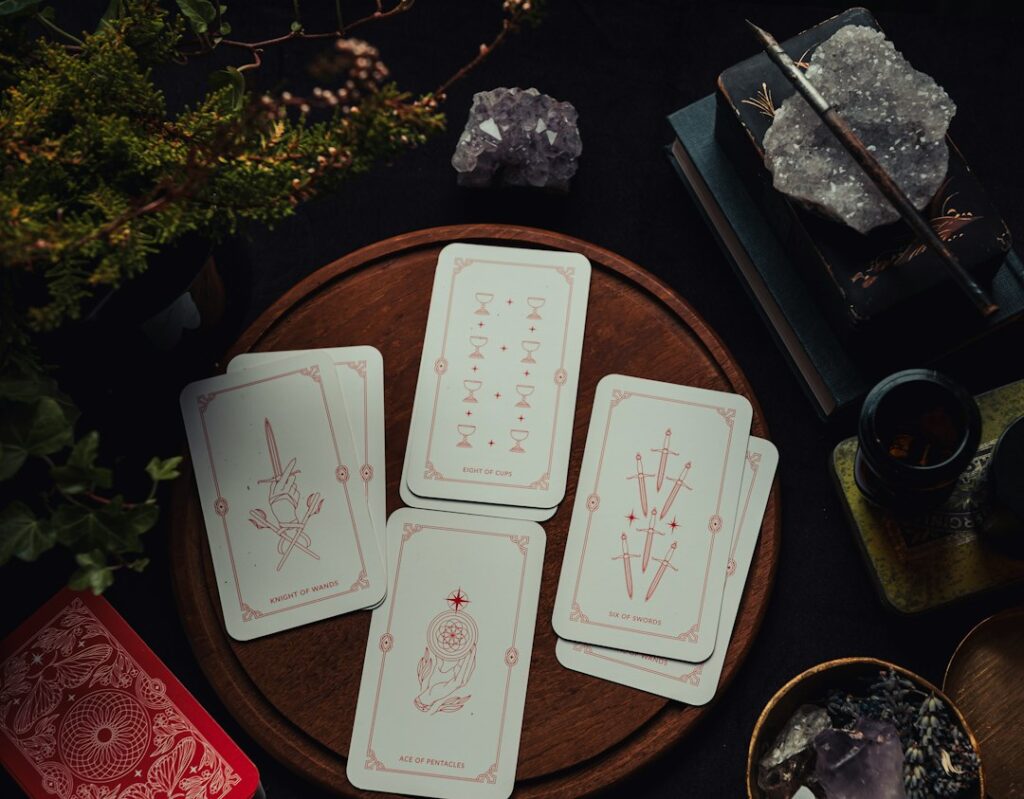
One of the first things people often ask when they start looking at tarot is a very sensible question: how do I know which meaning of a card applies to me?
After all, a single tarot card can have several different meanings. The answer is not always sitting in a little list of keywords. For me, that is actually part of what makes tarot interesting.
Start with the question
The same card can feel completely different depending on what you are asking.
If you are asking about a relationship, a card may make you think about communication, boundaries or how two people are relating to each other. If you are asking about work, that same card could make you think about confidence, pressure, change or a decision.
This is why I do not believe you have to memorise every possible meaning before you can work with tarot.
Look at the picture before the keywords
When I turn over a card, I like to spend a moment looking at it.
What catches my attention first? Is there a person I keep looking at? Does something in the image feel uncomfortable, hopeful, familiar or surprising?
Sometimes the first thing you notice tells you more about your response to the card than a page of traditional meanings can.
Notice what sits around the card
Tarot cards do not usually stand alone in a reading. The cards around them can change the way you understand the one in front of you.
It is a little like having a conversation. One sentence can sound different depending on what was said before it and what comes afterwards.
I look at the whole spread rather than trying to force one card to give me the entire answer.
What if the card seems negative?
This is something I hear quite often.
Someone sees a card they have been told is a bad card and immediately worries about what it means. I always think it is worth taking a breath before deciding that.
Tarot has cards that can represent difficult experiences, but difficult does not automatically mean disastrous. A card can point towards something that needs attention, a pattern that may be worth changing, or a situation that is asking you to look at something honestly.
I never see a card as a sentence handed down about your future.
You can ask the card another question
If a card leaves you unsure, there is nothing wrong with exploring it further.
You might ask:
What is this card asking me to notice?
What am I not seeing clearly?
How could I work with this energy in a helpful way?
Those questions can turn a confusing card into a useful conversation.
There is no single perfect interpretation
Traditional tarot meanings are useful. I use them myself. They give us a foundation and help us understand the language of the cards.
But a reading is also about the person sitting in front of you, the question they have brought and what is happening in their life at that moment.
That is why two people can receive the same card and take something completely different from it.
How I approach it in a reading
When I am reading for someone, I am not looking for one fixed sentence that supposedly explains everything.
I am interested in what the cards might help us explore. Sometimes a card confirms something the person has already been feeling. Sometimes it gives them another way of looking at a situation. Sometimes it simply raises a question they had not thought to ask.
That is where I think tarot can be really useful.
You do not have to know exactly what every card means before you begin. Start with the question, look at the image, notice your response and then consider the traditional meaning alongside the rest of the reading.
If you would like to explore a question of your own, you are welcome to have a look at how I approach readings here at Mystic Monkey or get in touch with me. You do not need to have the perfect question ready.